What Is a Dynamic QR Code?
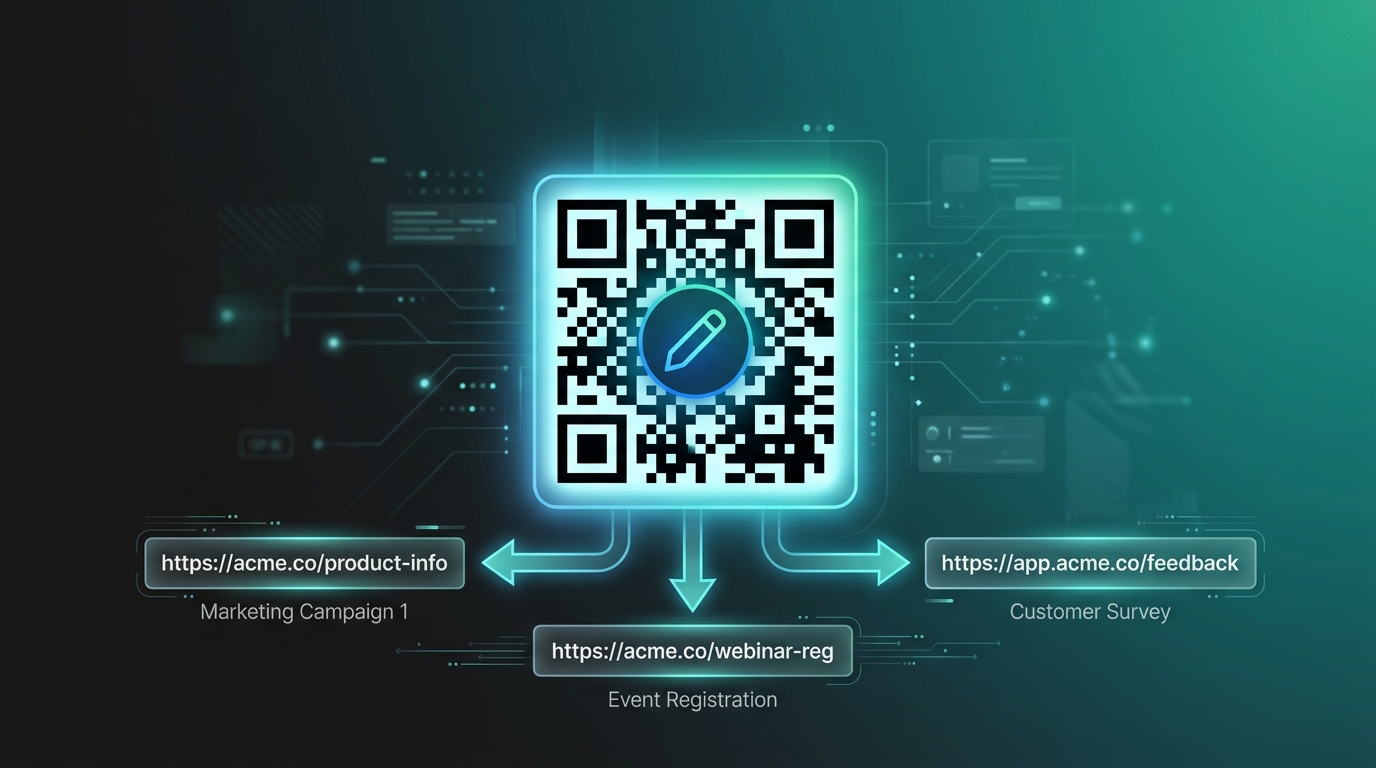
A dynamic QR code is a QR code that connects users to a digital destination through an editable link. Unlike a traditional static QR code, the destination behind a dynamic QR code can be changed without replacing the QR code that has already been printed.
This makes dynamic QR codes especially useful for businesses, restaurants, publishers, marketers, retailers, event organizers, and anyone who wants to connect physical materials with changing digital content.
For example, a restaurant can print one QR code on thousands of table stands and continue using the same QR code even when the digital menu changes. Instead of printing a new QR code, the restaurant can simply update the destination.
With a QR management platform such as QRoute, businesses can create, manage, and use QR codes for different digital experiences from one place.
How Does a Dynamic QR Code Work?
A dynamic QR code generally works through a redirect or management link between the QR code and the final destination.
When someone scans the QR code, the scan first reaches the dynamic QR link. The system then sends the visitor to the destination configured by the QR code owner.
This makes it possible to change the destination later without changing the printed QR code.
Simple Example
Imagine that a café prints a QR code on 500 table stands.
In January, the QR code opens the restaurant's digital menu. In February, the restaurant updates the menu and adds a new seasonal section.
The restaurant does not need to replace all 500 QR stands. The same QR code can continue working while the destination is updated.
The basic experience is:
- Customer scans the QR code
- QRoute processes the QR destination
- Customer reaches the current digital content
- Business can update the destination when needed
Dynamic QR Code vs Static QR Code
The most important difference between static and dynamic QR codes is what happens when you want to change the destination.
| Static QR Code | Dynamic QR Code |
|---|---|
| Destination is embedded directly in the QR code | QR code points to a managed destination |
| Difficult to change after printing | Destination can be updated |
| Best for permanent information | Useful for changing campaigns and content |
| Limited flexibility | More flexible for business use |
| Usually no centralized management | Can be managed from a QR platform |
For a QR code that will always point to the same destination, a static QR code can be sufficient. For campaigns, menus, books, packaging, marketing materials, and other use cases where content may change, a dynamic QR code can provide greater flexibility.
Why Are Dynamic QR Codes Important for Businesses?
Businesses often print QR codes on physical materials that remain in use for months or even years.
The problem is that digital information changes much faster than printed materials.
Prices change. Websites change. Menus change. Promotions end. Products are updated. Campaigns are replaced.
Dynamic QR codes help businesses handle these changes without having to replace every printed QR code.
1. Update Your Destination Without Reprinting
This is one of the biggest benefits of a dynamic QR code.
If your QR code is already printed on a poster, brochure, product package, table stand, book, or business card, you can update the destination without creating a completely new printed QR code.
2. Reduce Printing Waste
Replacing printed materials every time a digital destination changes can increase costs and create unnecessary waste.
A dynamic QR code allows the physical QR code to remain the same while the digital destination changes.
3. Manage QR Codes From One Place
Businesses using multiple QR codes can benefit from centralized management.
Instead of manually managing individual links, a QR platform can provide a structured way to organize and manage QR campaigns.
4. Track QR Code Engagement
Depending on the QR platform and configuration, dynamic QR codes can provide scan-related analytics.
Analytics can help businesses understand how their QR campaigns are performing and make better decisions about future campaigns.
Where Can You Use Dynamic QR Codes?
Dynamic QR codes are useful in many industries because they connect physical objects with digital information.
Restaurants and Cafés
Restaurants can use dynamic QR codes for digital menus, offers, customer reviews, ordering experiences, and other restaurant-related services.
For example, a restaurant can keep the same table QR code while changing its digital menu whenever prices or dishes are updated.
Books and Publishing
Publishers can add QR codes to printed books and connect them with videos, additional resources, chapter content, audio, or interactive experiences.
This is particularly useful for children's books, educational books, activity books, and other publications that benefit from digital content.
With a platform such as QRoute, publishers can build QR-powered experiences that connect printed pages with digital destinations.
Product Packaging
Brands can place QR codes on product packaging to connect customers with product information, instructions, videos, offers, warranty information, or support resources.
Marketing Campaigns
Marketers can use QR codes on posters, flyers, brochures, advertisements, packaging, and offline campaigns.
Because a dynamic QR destination can be updated, the same printed campaign asset can potentially support different digital destinations over time.
Events
Event organizers can use QR codes to connect attendees with schedules, registration information, venue details, maps, announcements, or event resources.
Business Cards
A dynamic QR code on a business card can connect users with a website, contact information, portfolio, social profile, or another digital destination.
Dynamic QR Codes for Restaurant Menus
Restaurant menus are one of the clearest examples of where dynamic QR codes can be useful.
Traditional printed menus can become outdated when restaurants change prices, remove dishes, or introduce seasonal items.
With a dynamic QR menu, the restaurant can keep the same QR code on its table stand while updating the digital menu behind it.
A typical restaurant workflow can look like this:
- Create a digital restaurant menu.
- Create a dynamic QR code.
- Print the QR code on table stands.
- Customers scan the QR code.
- The digital menu opens on their phone.
- The restaurant updates the digital menu whenever required.
Dynamic QR Codes for Books
Printed books are another powerful use case for dynamic QR technology.
A publisher can place a QR code next to a chapter, activity, lesson, or story and connect it to digital content.
For example:
- Chapter 1 → Introduction video
- Chapter 2 → Story video
- Chapter 3 → Educational explanation
- Chapter 4 → Activity demonstration
- Chapter 5 → Bonus content
If the digital content needs to change later, a dynamic QR system can provide the flexibility to update the destination without changing the physical QR code.
Dynamic QR Codes for Marketing
QR codes can connect offline marketing with online experiences.
A company can place a QR code on a printed advertisement and send customers to a campaign landing page.
When the campaign ends, the QR destination can be changed to another relevant page instead of immediately replacing every printed advertisement.
This makes dynamic QR codes useful for marketing campaigns that evolve over time.
What Can You Put Behind a Dynamic QR Code?
A dynamic QR code does not have to be limited to a single type of content.
Depending on the platform and configuration, QR codes can connect users to destinations such as:
- Websites
- Landing pages
- Digital menus
- Videos
- PDF documents
- Product pages
- Online forms
- WhatsApp conversations
- Contact information
- Social media pages
- Location pages
- Digital resources
How QRoute Helps Businesses Use Dynamic QR Codes
QRoute is a QR management platform designed to help businesses create and manage QR-powered digital experiences.
Instead of treating a QR code as just an image, QRoute can be used as a management layer between physical QR codes and digital destinations.
Businesses can use QR-powered experiences across different areas, including restaurants, publishing, retail, marketing, education, and other business applications.
QRoute Workflow
- Create your QR code.
- Choose the digital destination.
- Customize and prepare the QR code for use.
- Place it on your physical material.
- Customers scan the QR code.
- Manage or update the destination when required.
To explore QR code management and digital QR solutions, visit qroute.in.
How to Create a Dynamic QR Code
Creating a dynamic QR code can be straightforward when you use a QR management platform.
Step 1: Choose Your Destination
Decide what you want people to see after scanning the QR code. This could be a website, menu, video, document, product page, or another digital experience.
Step 2: Create the QR Code
Use a dynamic QR code generator or QR management platform such as QRoute to create the QR code.
Step 3: Test the QR Code
Scan the QR code using different smartphones and confirm that it opens the correct destination.
Step 4: Add the QR Code to Your Design
Place the QR code on your menu, book, packaging, poster, business card, standee, or other physical material.
Step 5: Print and Publish
Once tested, the QR code can be added to the final printed material.
Step 6: Manage Your QR Code
If your digital destination changes, update the destination through your QR management system instead of replacing the printed QR code.
Best Practices for Dynamic QR Codes
Make the QR Code Easy to Scan
Always maintain sufficient size, contrast, and clear space around the QR code.
Use a Clear Call to Action
Tell people what they will get after scanning.
Examples include:
- Scan to View Menu
- Scan to Watch
- Scan to Learn
- Scan for Offers
- Scan to Read
Test Before Printing
Always test QR codes before printing large quantities of physical materials.
Keep the Destination Mobile Friendly
Most QR scans happen on smartphones. Make sure the destination loads quickly and works properly on smaller screens.
Are Dynamic QR Codes Free?
The answer depends on the QR platform and the features you need.
Some services offer basic QR generation for free, while advanced dynamic QR functionality may be provided through paid plans.
When comparing QR platforms, look beyond the word "free" and check features such as QR management, destination editing, analytics, customization, usage limits, and business support.
Are Dynamic QR Codes Permanent?
A printed dynamic QR code can continue to work as long as the underlying QR service and destination remain active.
This is different from saying that every dynamic QR code is automatically permanent. Businesses should understand the terms and service conditions of the QR platform they use.
Can You Edit a Dynamic QR Code After Printing?
Yes, this is one of the primary reasons businesses choose dynamic QR codes.
If the QR code is already printed, the destination associated with the dynamic QR code can be updated through the QR management platform, provided the service supports destination editing.
The physical QR code itself does not need to be redesigned just because the digital destination has changed.
Dynamic QR Codes and QR Analytics
Another important advantage of many dynamic QR systems is the ability to understand scan activity.
Depending on the platform, analytics may help businesses understand how their QR codes are being used.
This can be valuable for:
- Marketing campaigns
- Restaurant promotions
- Printed advertisements
- Product packaging
- Events
- Business campaigns
Analytics can turn a simple printed QR code into a measurable digital touchpoint.
Dynamic QR Codes vs QR Code Images
It is important to understand that a QR code image and a dynamic QR system are not exactly the same thing.
A QR code image is the visual pattern that a smartphone scans. A dynamic QR system determines how that scan is managed and where the visitor is sent.
This distinction becomes important when businesses need editable destinations, campaign management, and analytics.
Who Should Use Dynamic QR Codes?
Dynamic QR codes can be useful for many types of organizations.
- Restaurants and cafés
- Publishers
- Schools and educators
- Retail businesses
- Hotels
- Event organizers
- Marketing agencies
- Product brands
- Small businesses
- Digital creators
Frequently Asked Questions About Dynamic QR Codes
What is a dynamic QR code?
A dynamic QR code is a QR code connected to a managed destination that can be changed without replacing the printed QR code.
What is the difference between static and dynamic QR codes?
A static QR code generally contains a fixed destination, while a dynamic QR code can use a managed destination that may be updated after the QR code has been printed.
Can I change a dynamic QR code after printing?
Yes. The destination behind a dynamic QR code can be updated through a compatible QR management platform without changing the printed QR code.
Can dynamic QR codes track scans?
Many dynamic QR platforms provide scan analytics. Available analytics and tracking features depend on the platform and plan.
Can restaurants use dynamic QR codes?
Yes. Restaurants can use dynamic QR codes for digital menus, promotions, reviews, ordering experiences, and other customer-facing digital content.
Can publishers use dynamic QR codes in books?
Yes. Publishers can connect printed book pages or chapters with videos, activities, audio, educational resources, and other digital content.
Can a dynamic QR code link to a video?
Yes. A dynamic QR code can be configured to direct users to a video or video page, depending on the QR platform being used.
Is a dynamic QR code better than a static QR code?
It depends on the use case. Static QR codes can be suitable for permanent destinations, while dynamic QR codes are more useful when businesses need flexibility, destination management, or analytics.
How can I create a dynamic QR code?
You can use a dynamic QR code generator or QR management platform such as QRoute to create and manage a dynamic QR code.
Conclusion
Dynamic QR codes are changing the way businesses connect physical materials with digital experiences. Their biggest advantage is flexibility: a printed QR code can continue to be used while the digital destination behind it changes.
From restaurant menus and children's books to product packaging, marketing campaigns, events, and business materials, dynamic QR codes can make physical experiences easier to manage and connect with digital content.
If your business regularly changes its digital content or wants to understand how customers interact with QR campaigns, a dynamic QR solution can be a useful addition to your digital strategy.
Ready to create smarter QR experiences? Explore QRoute at qroute.in and discover how dynamic QR codes can connect your physical and digital experiences.