What makes a QR code "dynamic"?
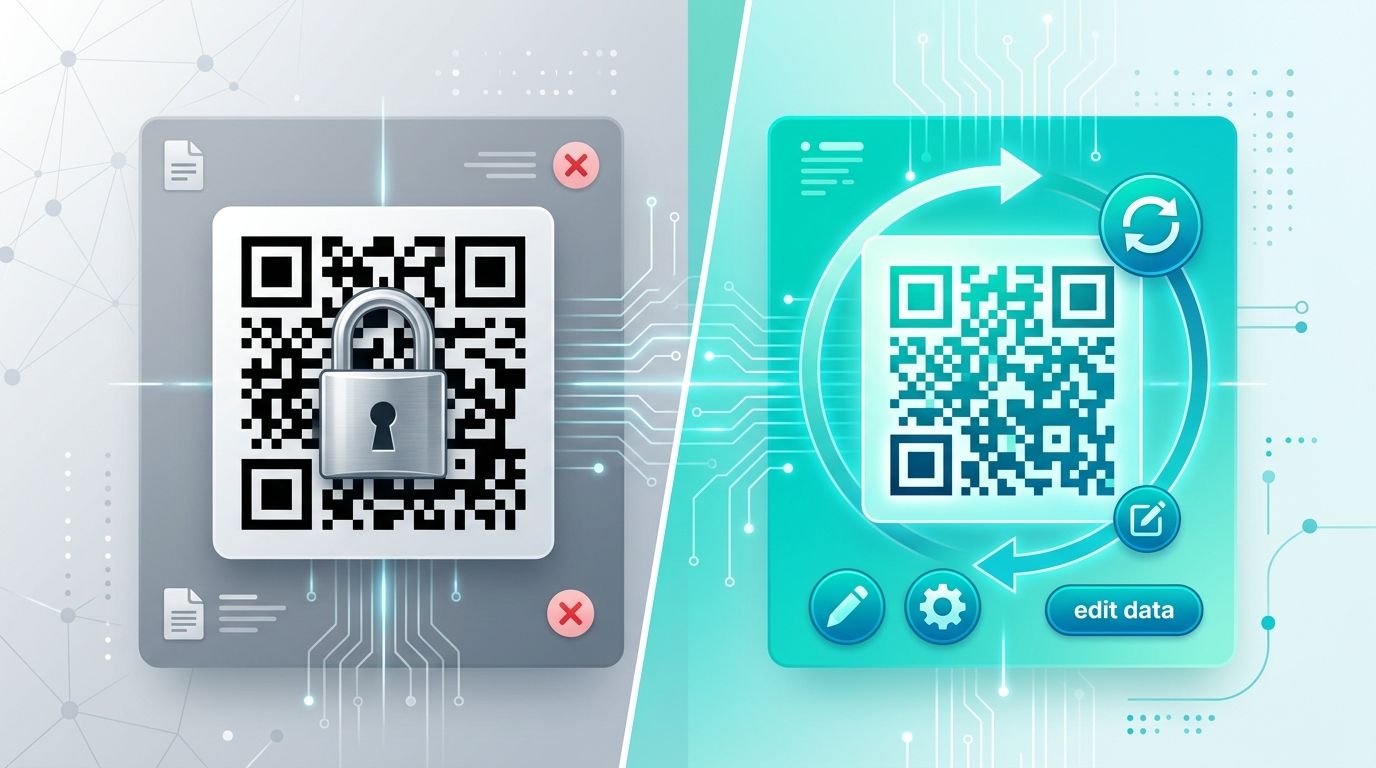
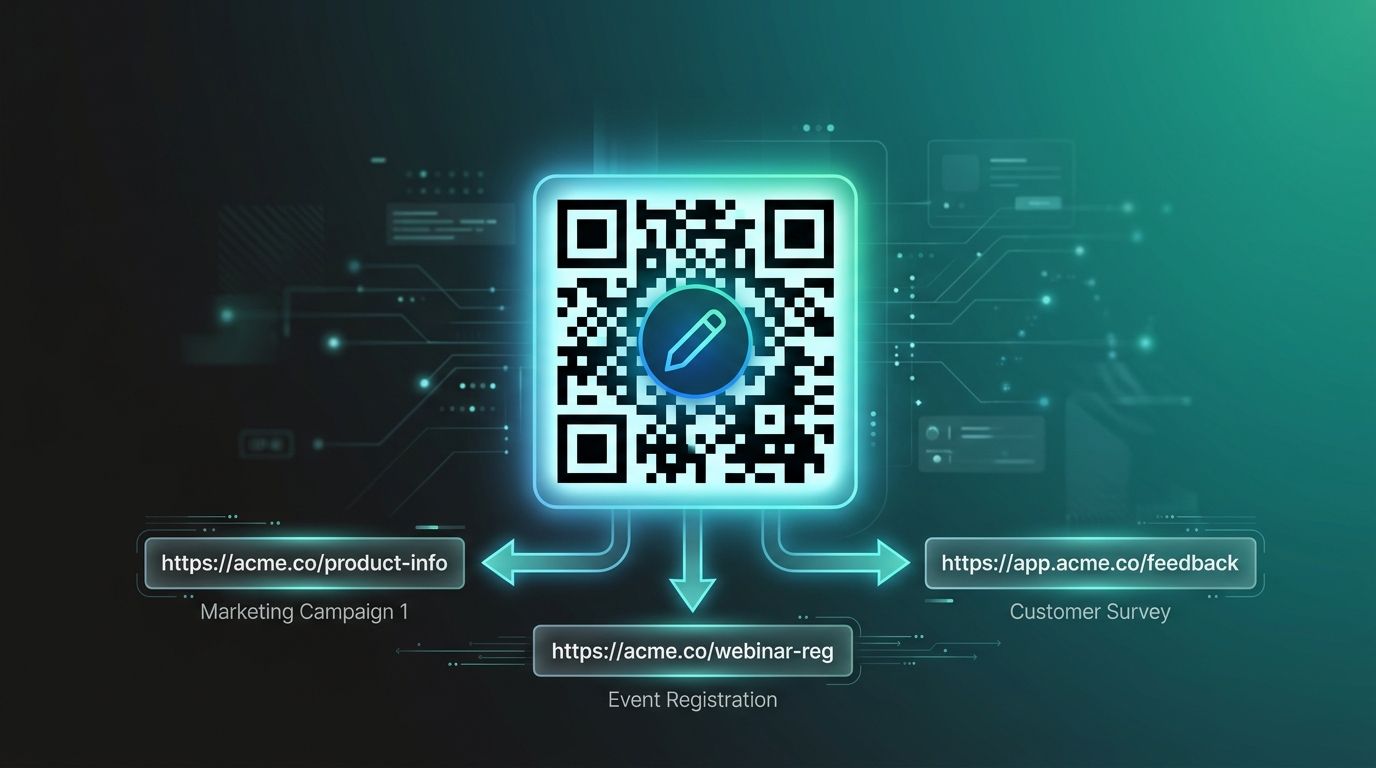
A standard (static) QR code encodes its destination directly into the pattern. Change the destination, and you need to reprint. A dynamic QR code instead encodes a short resolver URL — something like go.qroute.in/q/abc123. The resolver looks up the real destination in a database, so you can update that destination at any time without touching the printed code.
How the redirect works
When someone scans a dynamic code, their phone sends a request to the resolver. The resolver checks the slug (abc123), confirms the owning organization is active, applies any smart-routing rules (country, device, time of day), validates the destination URL against a safe-protocol allowlist, records a lightweight analytics event asynchronously, and issues a 302 redirect — all within milliseconds.
Crucially, analytics are enqueued asynchronously. If the analytics pipeline has a hiccup, the redirect still succeeds. Speed is a first-class product requirement.
Static vs dynamic: a quick comparison
- Static: Destination baked in. Can't be edited. No analytics. Great for Wi-Fi passwords and vCards where the data genuinely never changes.
- Dynamic: Destination stored server-side. Edit any time. Full scan analytics. The printed code never changes.
When should you use a dynamic QR code?
Choose dynamic whenever the destination might change or you need data: product packaging, print ads, textbooks, event badges, restaurant menus, and any campaign where you want to measure ROI.
Choose static for one-off, offline-only payloads — a home Wi-Fi password on a laminated card, or a vCard you hand out at a conference where you have no internet.
Dynamic codes and custom domains
With QRoute you can verify your own domain (say, go.brand.com) and route the same logical QR differently per domain. A publisher can have scan.publisher.in/q/lesson-01 serve the Hindi video while qr.bookseries.com/q/lesson-01 opens a language selector — same printed code, same slug, different behaviour per domain.
Key takeaways
- Dynamic codes encode a short resolver URL, not the final destination.
- You can update the destination at any time — no reprinting required.
- Analytics are recorded asynchronously so redirects are never delayed.
- Smart-routing rules let one code behave differently by country, device, or domain.