Static QR codes — how they work
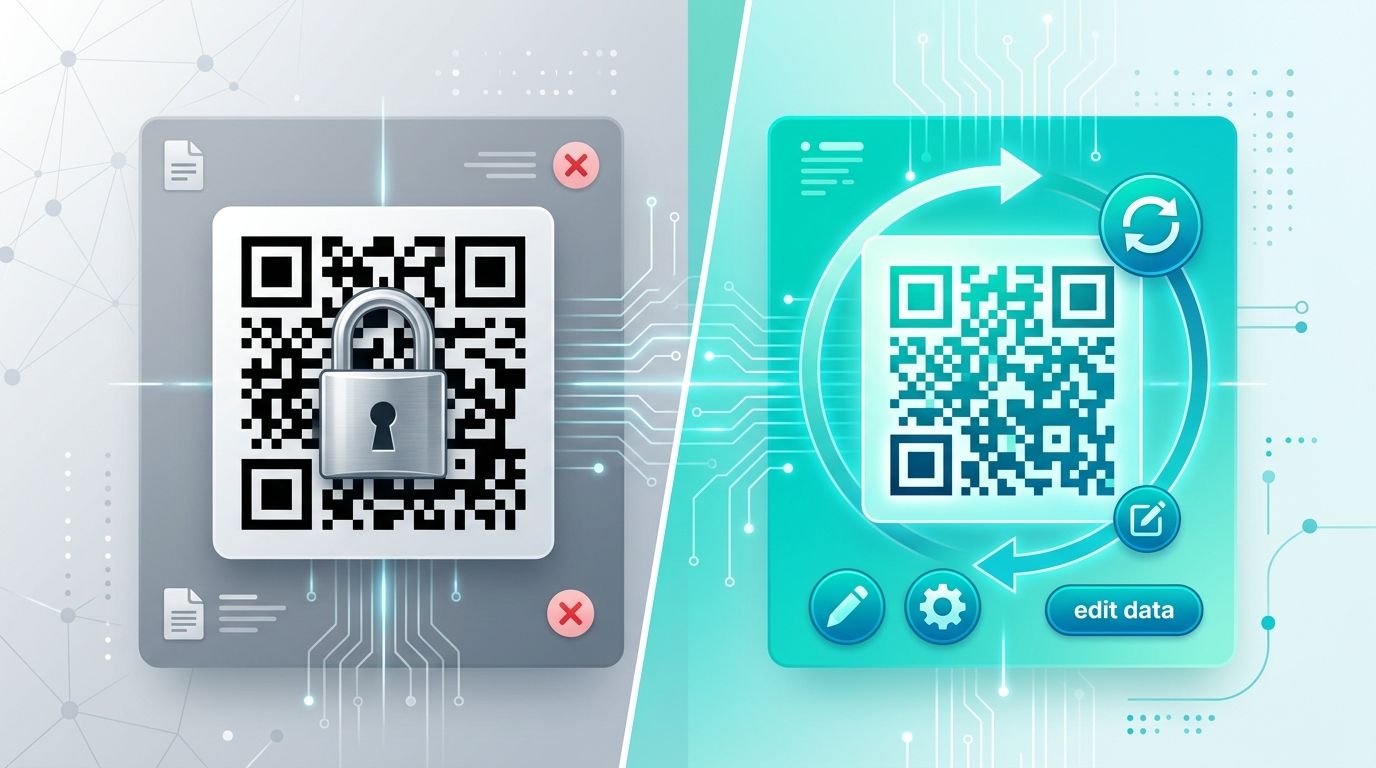
A static QR code encodes its payload (a URL, a phone number, a Wi-Fi password) directly into the dot pattern. The content is baked in. Scan it with any reader and you get exactly what was encoded, with no server involved.
Pros: Works offline. No account required. Free to generate forever. Scan speed is marginally faster (no redirect hop).
Cons: Cannot be updated. No analytics. Destination rot — if the URL goes dead, there's nothing you can do without reprinting.
Dynamic QR codes — how they work
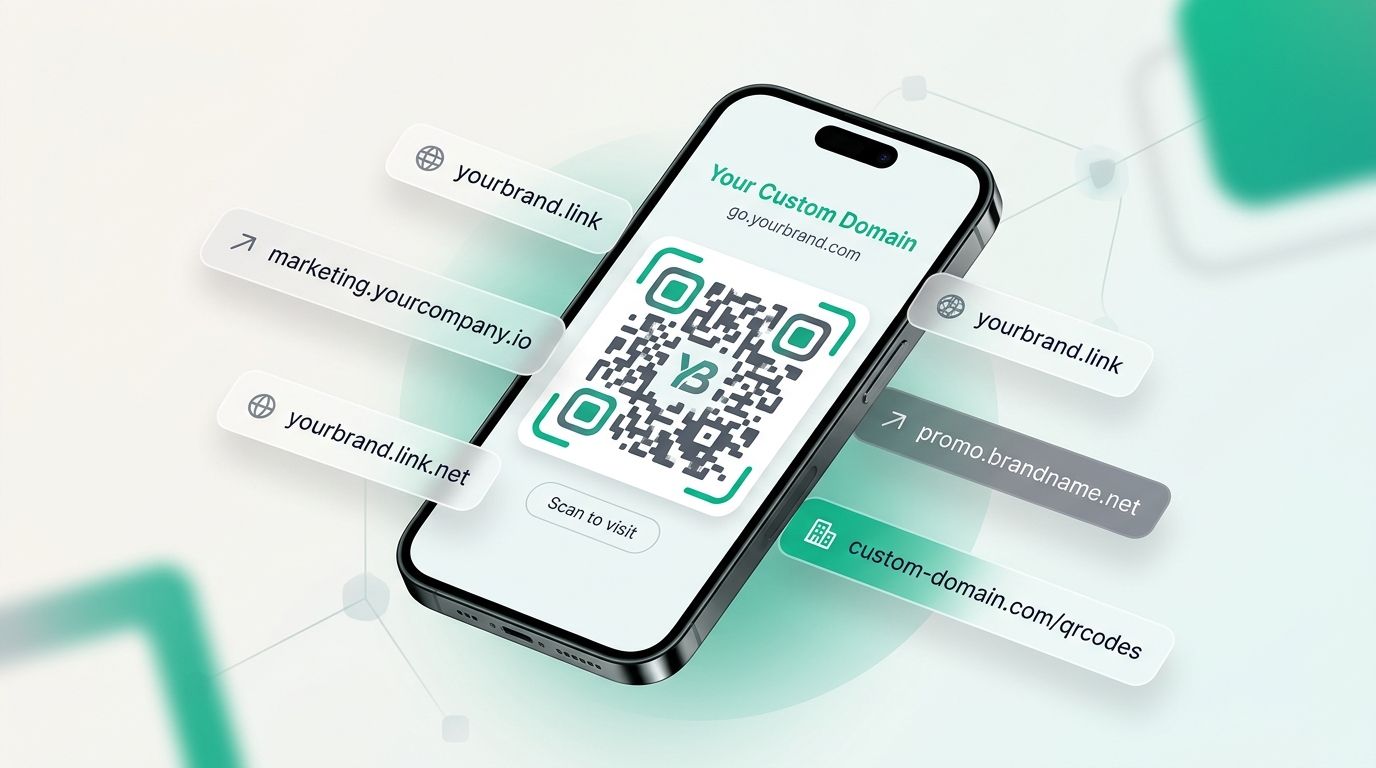
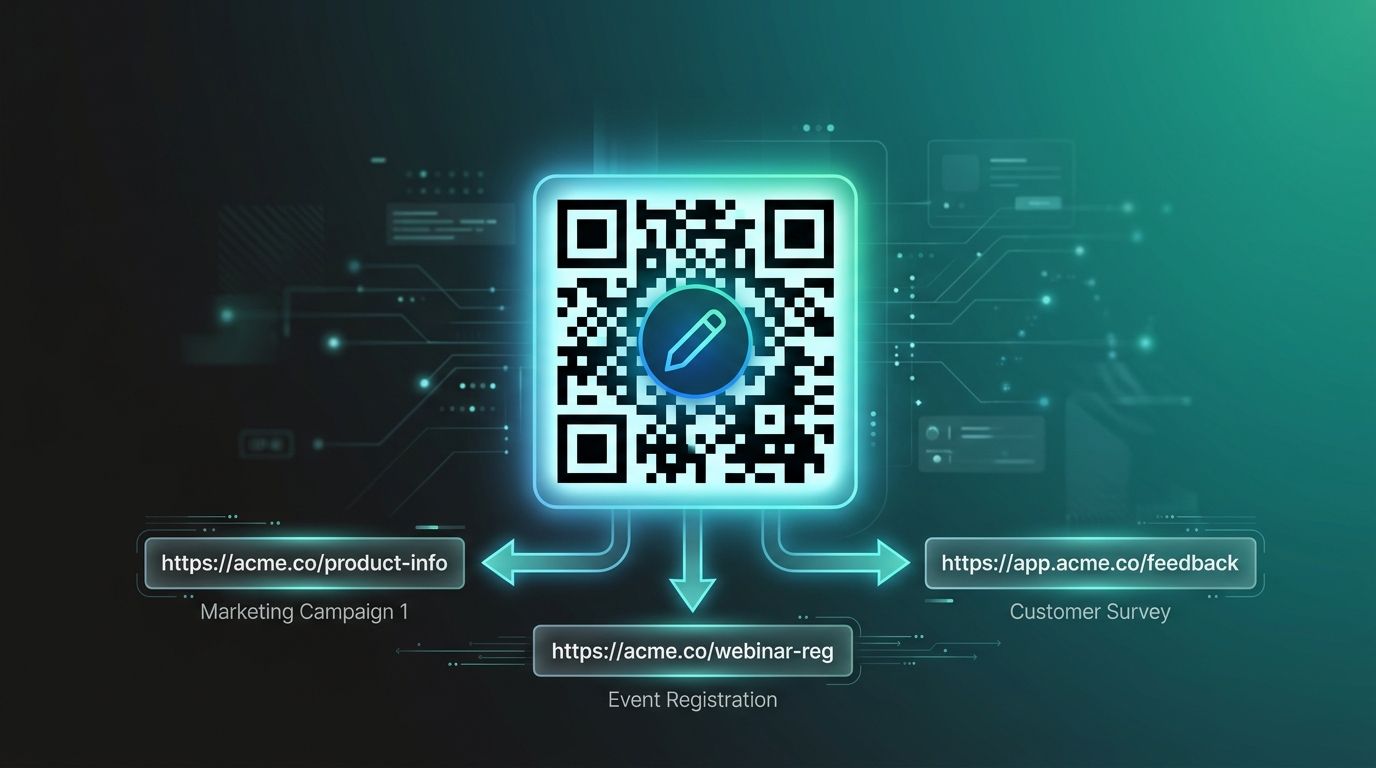
A dynamic QR code encodes a short resolver URL (e.g. go.qroute.in/q/abc123). The resolver looks up the real destination in real time, records an analytics event asynchronously, applies any routing rules, and redirects — all in under 150 ms at the 95th percentile.
Pros: Edit destination any time. Full scan analytics. Smart routing by country, device, or time. Custom branded domains.
Cons: Requires an active subscription for tracking. Technically one redirect hop (imperceptible in practice).
Decision framework
| Situation | Recommended type |
|---|---|
| Home Wi-Fi password (rarely changes) | Static |
| vCard / personal contact (stable) | Static |
| Restaurant menu (changes weekly) | Dynamic |
| Product packaging (destination may change) | Dynamic |
| Print ad campaign (need ROI data) | Dynamic |
| Textbook chapter (may be updated) | Dynamic |
| Event badge (one-time, offline) | Static |
| Loyalty programme (needs analytics) | Dynamic |
Can a dynamic code "fail"?
Only if the resolver itself is down, which is why QRoute targets at least 99.95% redirect availability for paid plans. The code itself never expires — the resolver subscription does. Even then, QRoute's downgrade policy ensures previously distributed codes keep resolving.