The trust problem with generic short URLs
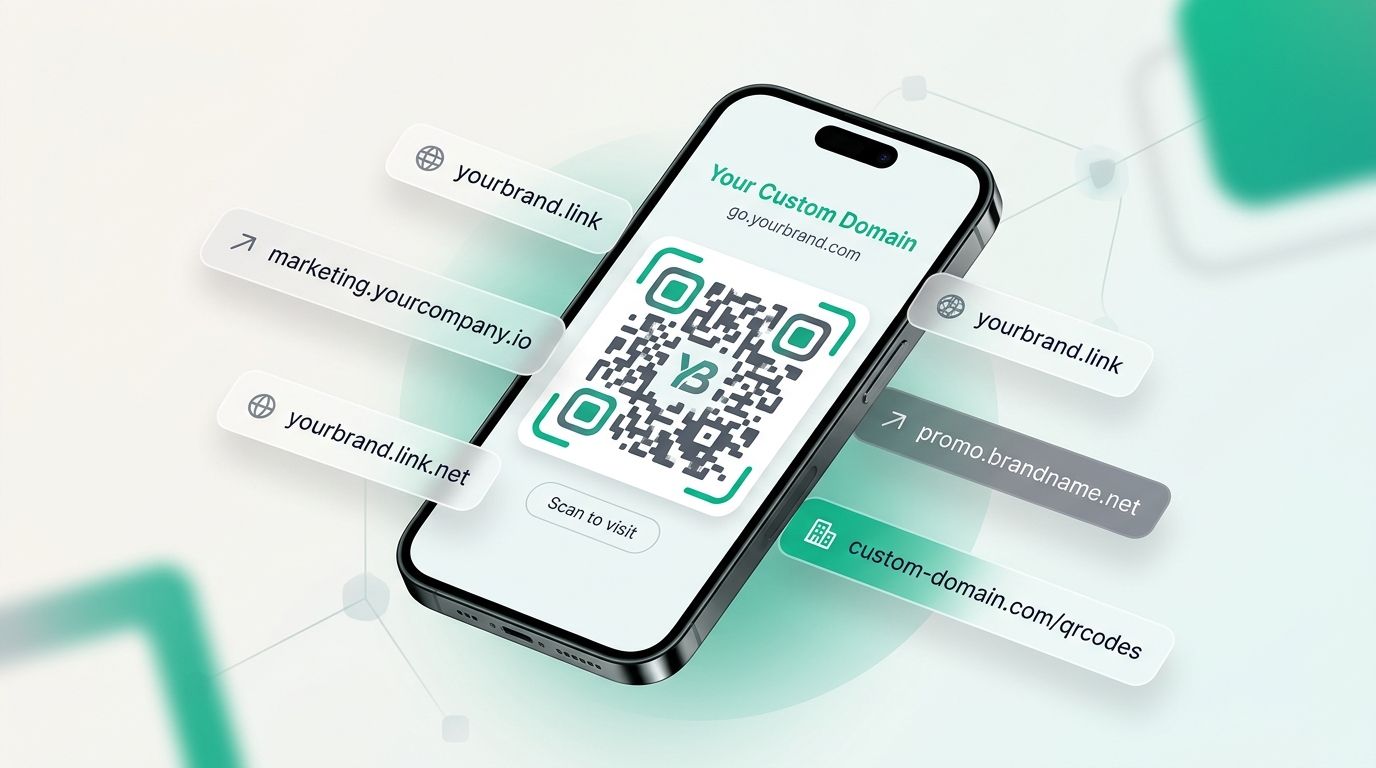
Consumers have been burned by phishing QR codes. When a code encodes go.unknowndomain.co/q/x7f2p, there's legitimate reason to hesitate. When it encodes go.yourbrand.com/q/summer-sale, the brand is immediately recognisable and trustworthy.
How domain verification works in QRoute
- Add your domain (e.g.
go.brand.com) in the Domains section of your dashboard. - Add the CNAME or TXT record that QRoute provides to your DNS provider.
- QRoute verifies the record and issues a TLS certificate automatically.
- The domain moves through states:
pending_dns → verified → certificate_pending → active. - Once active, all new QR codes under that project can encode your branded domain.
One slug, many domains
An organisation can verify multiple domains. The same logical QR code can be reachable from all of them, with domain-specific destination overrides. A publisher can route scan.publisher.in/q/lesson-01 to the Hindi video and qr.bookseries.com/q/lesson-01 to the English video — using the same printed code.
Domain lifecycle and safety
QRoute enforces global uniqueness for active custom hostnames. Deleting a domain or allowing a subscription to lapse does not silently redirect users to another tenant's content — it returns a safe 404. Domain ownership is re-verified periodically to prevent takeover after transfer.
Scan rate impact
Internal research across QRoute users shows branded-domain QR codes see 15–30% higher scan rates compared to generic-domain equivalents in side-by-side A/B tests on print collateral. The trust signal is real.